كم من المال تحتاج للبدء في التداول؟
يمكنك البدء في تعلم التداول بمبلغ 0 دولار باستخدام حساب تجريبي, يحاكي ظروف السوق الحقيقية دون المخاطرة بأموال حقيقية. أما للتداول الحقيقي، فيختلف الحد الأدنى للإيداع من وسيط لآخر، إذ يتيح بعضها الدخول بمبلغ لا يتجاوز 10 دولارات. ومع ذلك، فبينما تكفي الودائع الصغيرة تقنياً للبدء، إلا أنها تحدّ بشكل كبير من حجم المركز والتحكم في المخاطر وإمكانية الربح. بالنسبة لمعظم المبتدئين الذين يسعون إلى تنمية حساباتهم بشكل واقعي، يوفر البدء بمبلغ حوالي 500 دولار توازناً أفضل بين إدارة المخاطر والعوائد المجدية.
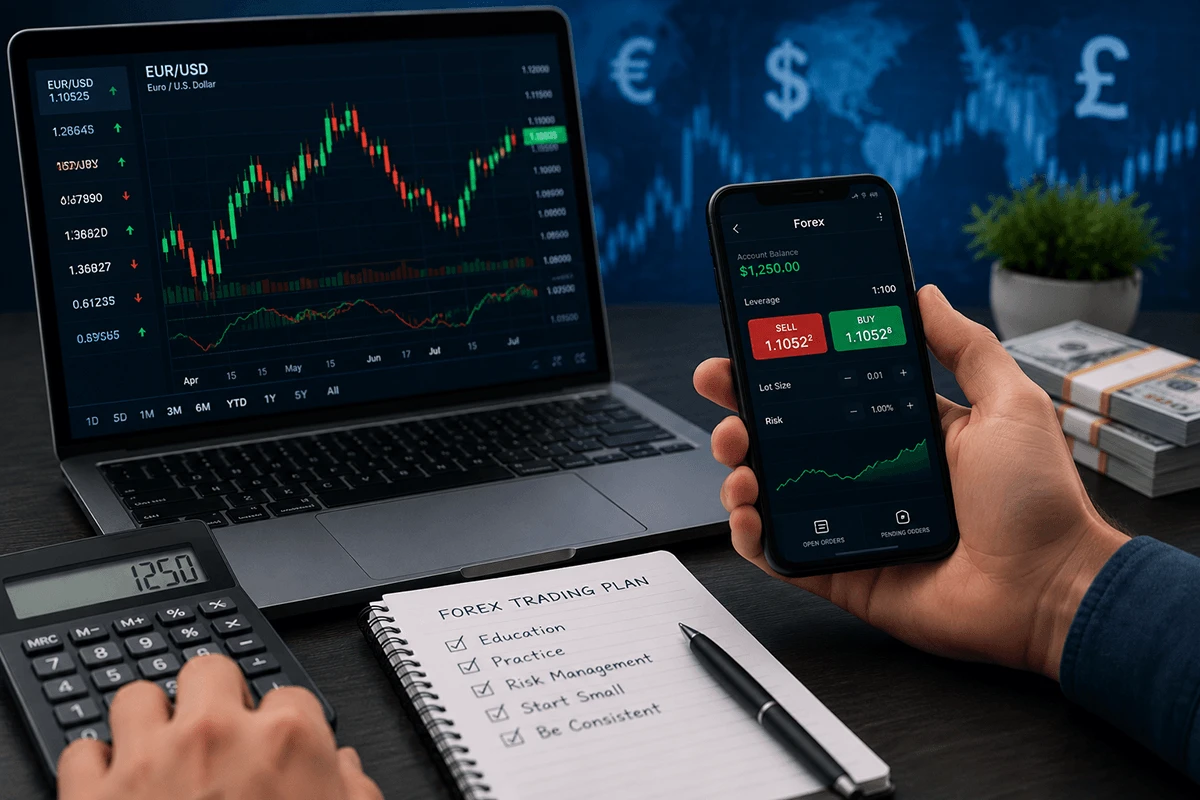
هل يمكنك بدء تداول الفوركس بدون مال؟
نعم، يمكن البدء في تداول الفوركس بدون تكلفة من خلال الحسابات التجريبية.
الحساب التجريبي:
- يستخدم أموالاً افتراضية بدلاً من الأموال الحقيقية.
- يحاكي ظروف السوق الحية (الأسعار والرسوم البيانية والتنفيذ).
- يتيح لك ممارسة الاستراتيجيات وفهم منصات التداول مثل MT4 أو MT5.
هذه هي الطريقة الأكثر أماناً لتعلم كيفية عمل الرافعة المالية والسبريد وأنواع الأوامر قبل المخاطرة برأس المال.
ما هو الحد الأدنى للإيداع في الفوركس؟
يختلف الحد الأدنى للإيداع حسب الوسيط ونوع الحساب.
النطاقات الشائعة:
- 10–50 دولار: حسابات المايكرو أو الحسابات الأساسية.
- 100–500 دولار: الحسابات القياسية للمبتدئين.
- 1,000 دولار فأكثر: الحسابات المتقدمة.
نوع الحساب | الحد الأدنى النموذجي للإيداع |
المايكرو / المستوى الأساسي | 10–50 دولار |
المبتدئ القياسي | 100–500 دولار |
متقدم / احترافي | 1,000 دولار فأكثر |
على سبيل المثال، تقدم بعض الوسطاء مثل NordFX حداً أدنى للإيداع بمبلغ 10 دولارات فقط في حساب MT4 Pro, مما يجعل التداول في متناول الجميع حتى برأس مال صغير جداً.
كيف تتيح الرافعة المالية الودائع الصغيرة؟
تتيح لك الرافعة المالية التحكم في مركز أكبر من رصيدك الفعلي.
يتم التعبير عنها كنسبة، مثل 1:1000.
مثال:
- الإيداع: 100 دولار
- الرافعة المالية: 1:1000
- الحجم الأقصى للمركز: 100,000 دولار
حتى بمبلغ 10 دولارات، يمكنك التحكم في ما يصل إلى 10,000 دولار في السوق.
ومع ذلك، تزيد الرافعة المالية من الربح المحتمل والمخاطر في آنٍ واحد. يمكن لحركة سعرية صغيرة ضد صفقتك أن تتسبب في خسائر سريعة، خاصةً مع الرافعة المالية العالية.
إدارة المخاطر: العامل المحدِّد الحقيقي
يهمّ حجم حسابك أقل مما تخاطر به في كل صفقة.
قاعدة شائعة الاستخدام:
- خاطر بنسبة 2% إلى 5% فقط من رأس مالك في كل صفقة.
مثال:
- الحساب: 100 دولار
- الحد الأقصى للمخاطرة لكل صفقة: 2–5 دولارات
مع حساب بـ10 دولارات:
- الحد الأقصى للمخاطرة لكل صفقة هو حوالي 0.20–0.50 دولار
- وهذا يستلزم التداول بأحجام مايكرو أو نانو لوت
مما يحدّ بشكل كبير من إمكانية الربح ويجعل النمو المستمر أمراً عسيراً.
حجم اللوت والتحكم في المراكز
تُقاس صفقات الفوركس بأحجام اللوت:
- اللوت القياسي = 100,000 وحدة عملة
- المينيلوت = 10,000 وحدة
- المايكرولوت = 1,000 وحدة
مع الحسابات الصغيرة، يجب على المتداولين استخدام أحجام المايكرولوت للبقاء ضمن حدود المخاطر.
مثال:
- يتحرك المايكرولوت عادةً بمقدار 0.10 دولار لكل نقطة.
- إذا كان حد مخاطرتك هو 1 دولار، فلا يمكنك إلا تحمّل وقف خسارة بمقدار 10 نقاط وهو صغير جداً لمعظم أدوات التداول.
يوضح هذا سبب تقييد الأرصدة الصغيرة للمرونة.
هل يكفي 10 دولارات لبدء تداول الفوركس؟
نعم، ولكن للتدريب بشكل رئيسي لا لتوليد الدخل.
بمبلغ 10 دولارات:
- يمكنك فتح صفقات باستخدام رافعة مالية عالية.
- يجب عليك استخدام أحجام مراكز صغيرة للغاية.
- ستكون الأرباح صغيرة جداً.
- يمكن لعدد قليل من الصفقات الخاسرة أن تُصفّر الحساب.
إنه مفيد لتعلم ظروف السوق الحقيقية ولكن ليس لتحقيق عوائد مجدية.
كم يجب أن تبدأ به بشكل واقعي؟
لمعظم المبتدئين، يُعدّ رصيد بداية يبلغ حوالي 500 دولار أكثر عملية.
فوائد البدء بـ500 دولار فأكثر:
- مرونة أفضل في إدارة المخاطر.
- القدرة على استخدام وقف خسارة أوسع.
- نمو أكثر استقراراً للحساب.
- تقليل تأثير الخسائر الفردية.
يتيح لك هذا المبلغ تطبيق الانضباط التداولي الصحيح مع الحفاظ على إمكانية إدارة المخاطر.
إجابات سريعة (الأسئلة الشائعة)
هل يمكنني بدء الفوركس بـ0 دولار؟
نعم، عن طريق استخدام حساب تجريبي بأموال افتراضية.
ما هو الحد الأدنى للإيداع في تداول الفوركس؟
يمكن أن يكون منخفضاً كـ10 دولارات أو حتى دولار واحد، اعتماداً على الوسيط.
هل يكفي 10 دولارات لكسب المال في الفوركس؟
لا، لأن الأرباح ستكون محدودة جداً.
كم يحتاج المبتدئون للتداول في الفوركس؟
يستفيد معظم المبتدئين من البدء بمبلغ لا يقل عن 100–500 دولار، مع كون 500 دولار فأكثر أكثر عملية.
لماذا يكون رأس المال الأكبر أفضل في الفوركس؟
يتيح إدارة أفضل للمخاطر ومرونة في تحديد حجم المراكز وإمكانية نمو أكثر اتساقاً.
العودة العودة